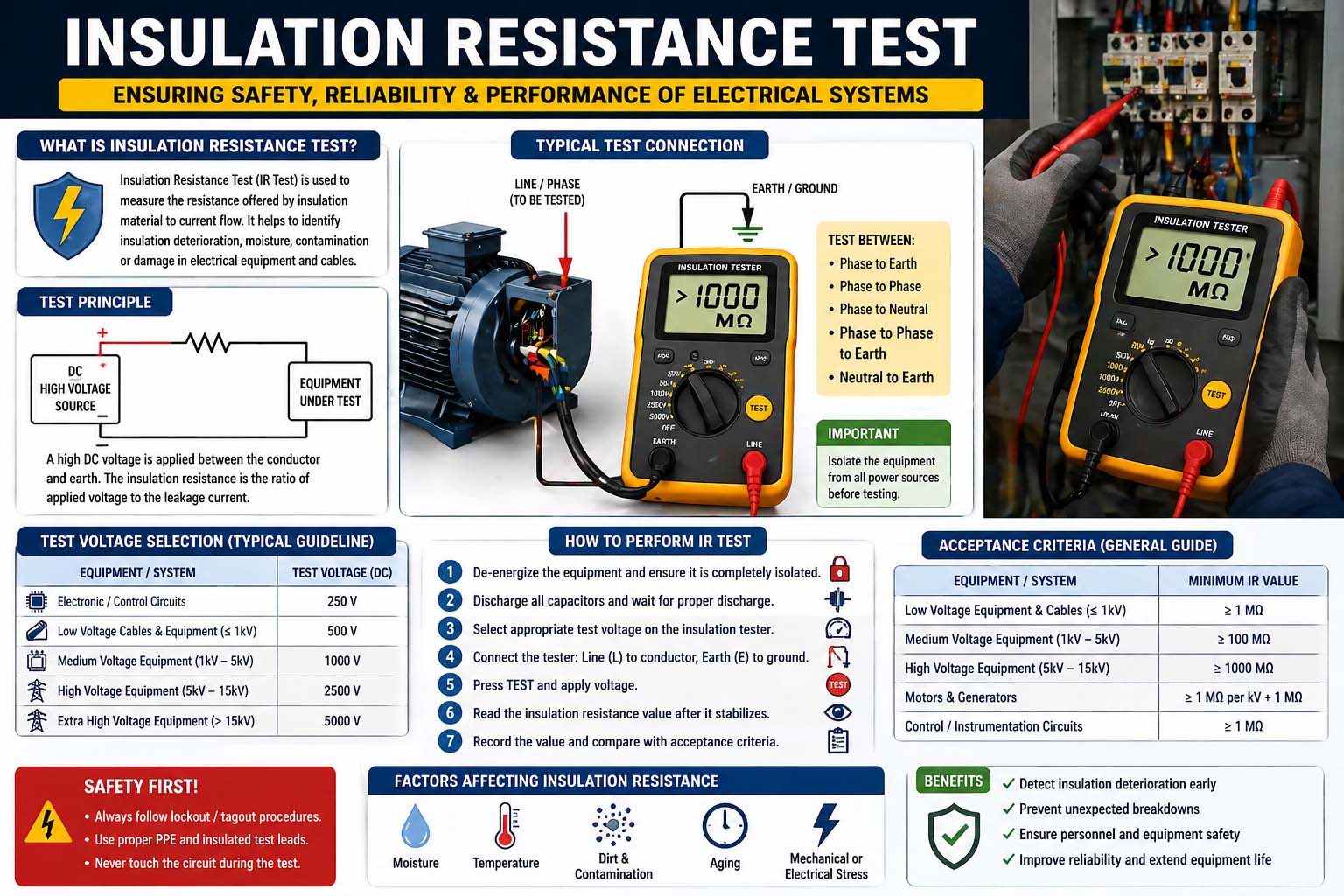
An insulation resistance test is an important procedure used to check the condition of electrical insulation in wires, cables, motors, transformers, and other electrical equipment. The test helps determine whether insulation materials are still effective in preventing unwanted current leakage. Good insulation is essential for electrical safety, equipment reliability, and efficient operation.
Many industries, electricians, and maintenance teams rely on the insulation resistance test to identify hidden faults before they become serious problems. Regular testing can prevent electrical failures, downtime, fires, and costly repairs.
What Is an Insulation Resistance Test?
An insulation resistance test measures the offered by insulation materials between conductors or between conductors and earth. The resistance is measured in ohms, usually megaohms (MΩ). High resistance indicates good insulation, while low resistance may signal moisture, dirt, aging, cracks, or damage.
This test is commonly performed using a special device called a megohmmeter or insulation tester. The tool applies a DC voltage and measures how much current leaks through the insulation.
Why Is an Insulation Resistance Test Important?
Electrical insulation naturally degrades over time due to heat, moisture, dust, vibration, chemicals, and aging. If insulation weakens, it can create dangerous situations such as short circuits or electric shock.
Performing an offers several benefits:
Where Is the Test Used?
The is widely used across many industries. Common applications include electrical cables, switchgear panels, motors, generators, transformers, household wiring systems, solar systems, industrial machines, and control panels.
Construction companies also perform the test before handing over new buildings. Maintenance teams use it during scheduled inspections to confirm electrical health.
Equipment Needed
To perform an insulation resistance test, you need a reliable insulation tester or megger. Other useful tools include safety gloves, lockout devices, warning tags, and documentation sheets for recording results.
Modern digital testers provide accurate readings, memory storage, and automatic calculations. Some advanced models can test at different voltage levels such as 250V, 500V, 1000V, or higher depending on the application.
Before starting, disconnect the equipment from the power supply. Ensure the circuit is de-energized and safe to handle. Remove sensitive electronics if required because high test voltage may damage them.
Next, connect the tester leads to the conductors or equipment terminals. One lead is usually connected to the conductor, and the other to earth or another conductor.
Select the correct test voltage based on the equipment rating. Start the test and allow the reading to stabilize. Record the measured resistance value.
After completing the test, discharge the equipment safely because some components may retain charge.
Understanding Test Results
Interpreting results is a key part of the insulation resistance test. In general, higher resistance values indicate better insulation condition.
For example:
Low voltage circuits may require at least 1 megaohm. Industrial motors and cables often require much higher values depending on standards and manufacturer recommendations.
If readings suddenly drop compared to previous tests, this may indicate insulation deterioration. Trending results over time is often more useful than relying on a single measurement.
Factors Affecting Results
Several factors can influence insulation resistance test readings. Temperature is one of the biggest factors because warmer insulation usually shows lower resistance. Moisture can significantly reduce readings. Dirt, oil, and contamination also affect performance.
To obtain consistent results, tests should be performed under similar environmental conditions whenever possible.
Safety Tips During Testing
Safety should always come first when carrying out an insulation resistance test. Make sure the system is fully isolated from power. Use proper lockout and tagout procedures. Wear personal protective equipment. Keep others away from the testing area.
Never touch conductors during the test because dangerous voltage is applied by the tester. Always discharge the circuit after testing.
Common Problems Found
An insulation resistance test can reveal several hidden issues such as damaged cable jackets, wet insulation, overheating damage, contamination buildup, loose connections, aging motor windings, and cracked insulation materials.
Early detection allows maintenance teams to repair or replace components before total failure occurs.
Best Practices for Maintenance
To get the most value from insulation resistance test procedures, create a regular inspection schedule. Keep historical records of all readings. Compare current values with previous trends. Clean equipment regularly and protect it from moisture.
Using preventive maintenance programs can save time and money while improving electrical system reliability.
Conclusion
The insulation resistance test is one of the most effective ways to assess electrical insulation health. It helps prevent accidents, reduce downtime, and maintain reliable system performance. Whether testing motors, cables, or building wiring, regular inspections provide peace of mind and long-term savings.
By understanding the correct procedure, safety measures, and result interpretation, businesses and electricians can use the insulation resistance test as a powerful tool for preventive maintenance and electrical safety.